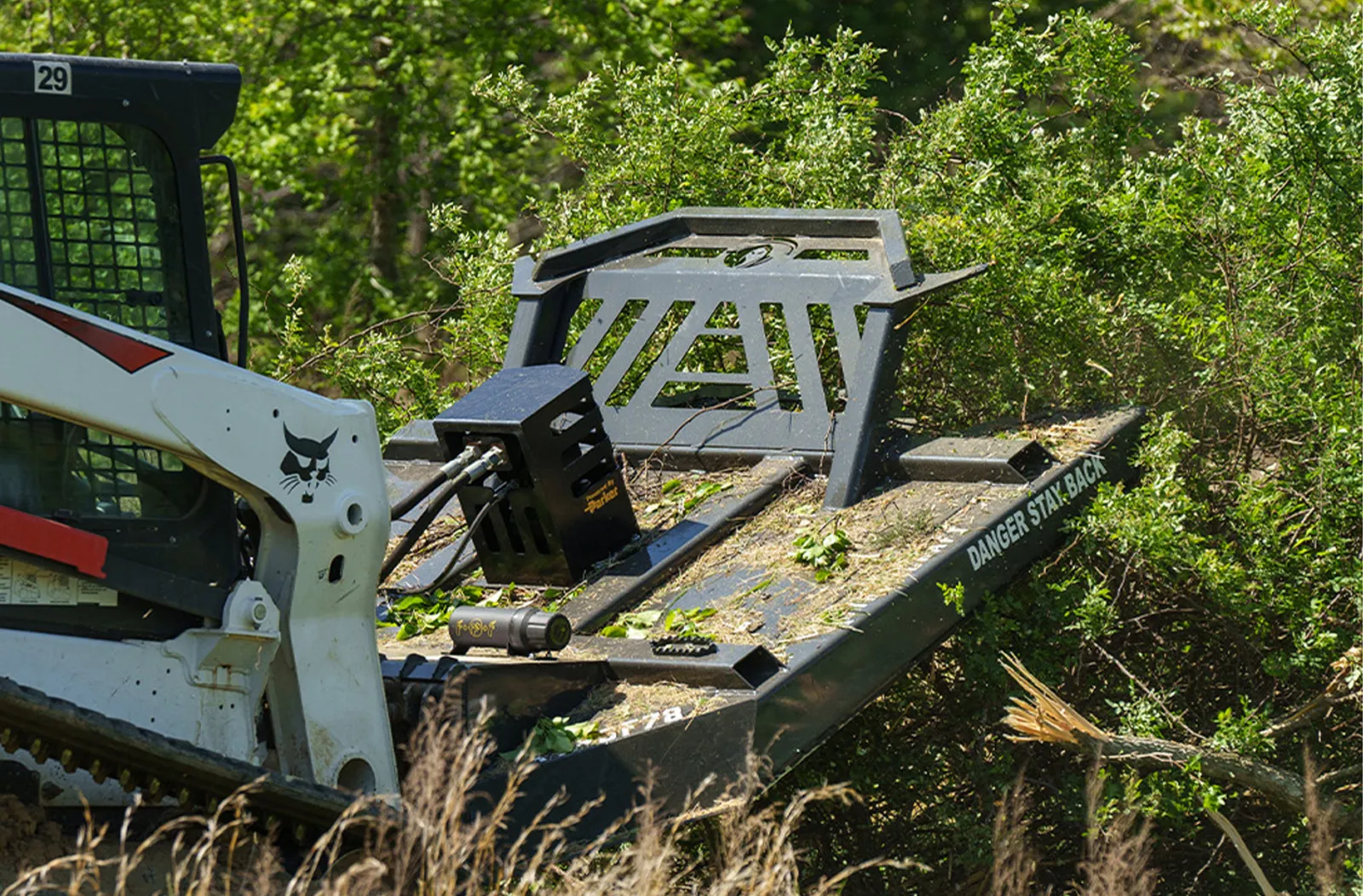
How Much Does Brush Hogging Cost?
Published market data puts most brush hogging between about $25 and $180 per acre. Hourly rates in the same sources run about $50 to $185 per hour. Open, flat pasture sits at the low end. Tall, woody growth on rough ground sits at the high end.
Two things move your number more than anything else. The first is how heavy the growth is. The second is how hard the field is to drive a mower across. Everything below is market data, not our price list.
What do published brush hogging rates look like?
The cleanest numbers come from university farm custom rate surveys. These are yearly surveys of what farmers and custom operators actually charge each other.
Iowa State University Extension’s 2025 custom rate survey lists pasture and conservation land mowing at $27.00 per acre on average. The reported range was $12.00 to $50.00 per acre. The same survey lists brush chopping at $103.75 per acre on average. That range ran $40.00 to $180.00.
Hourly figures land in a similar band. A University of Missouri Extension custom rate guide lists mowing brush or overgrown pasture at $125.71 per hour on average. The reported range was $50.00 to $175.00 per hour. Iowa’s survey put fence row and ditch mowing near $99 per hour, ranging from $40 to $185.
Consumer cost guides run higher, because they price smaller jobs with more obstacles. One national brush hogging cost guide lists $75 to $250 per acre. It puts a machine with an operator at $90 to $180 per hour.
| Type of work | Published range | Billed | Kind of source |
|---|---|---|---|
| Pasture and conservation land mowing | $12 to $50 per acre | Per acre | University farm custom rate survey |
| Brush chopping on farm ground | $40 to $180 per acre | Per acre | University farm custom rate survey |
| Mowing brush or overgrown pasture | $50 to $175 per hour | Per hour | University farm custom rate survey |
| Mowing fence rows and ditches | $40 to $185 per hour | Per hour | University farm custom rate survey |
| Brush hogging, general | $75 to $250 per acre | Per acre | National cost guide |
| Brush hogging, machine and operator | $90 to $180 per hour | Per hour | National cost guide |
| Single pass on light vegetation | $150 to $600 per acre | Per acre | Contractor pricing guide |
| Brush removal | $20 to $200 per acre | Per acre | Oregon published cost page |
| Machine time on a clearing job | $150 to $300 per hour | Per hour | Oregon published cost page |
Those are other people’s published numbers, gathered from other people’s jobs. Our brush hogging and field mowing page covers what the mower takes and what a pass leaves behind.
What are you paying for in a brush hogging quote?
One national cost guide breaks a brush hogging hour into parts. Machine time runs $50 to $150 per hour. Operator labor runs $20 to $90 per hour. Fuel and upkeep add $5 to $60 per hour.
Travel and setup sit on top of that. The same guide lists $50 to $600 for getting the machine to the job. Cost guides also list a minimum charge, commonly $150 to $350.
That structure explains most of the spread you see in quotes. A big open field spreads those fixed costs thin. A small rough field does not.
Why is brush hogging quoted per acre or per hour?
Open fields usually get quoted per acre. The whole job is visible from the field edge. The passes are predictable, so the price is easy to hold.
Rough ground usually gets quoted per hour. Hidden stumps, wet spots and tight corners slow a machine down in ways nobody can measure from the road.
Either way, the two numbers connect through pace. Ask how many acres per hour the machine covers in growth like yours, and the quotes become easy to compare.
What makes brush hogging cost more per acre?
Growth height and thickness come first. Grass and light weeds mow in one pass. Contractor pricing guides put a brush mower’s practical limit near 2 to 3 inch saplings. Thicker stems slow everything down.
Terrain comes second. One contractor guide reports that flat ground clears 30 to 50 percent faster than slopes. Slopes, ditch banks and soft ground all cut into how many acres get finished in a day.
Obstacles come third. Stumps, rocks, buried wire, old posts and holes force slow passes. They also risk blade and gearbox damage, which operators price in.
How long does an acre take to mow?
One contractor pricing guide estimates 2 to 4 hours per acre on light brush. Open grass goes faster. Heavy, tangled growth goes slower, because the mower has to take it in bites.
Run that against an hourly rate and the math lines up with the per-acre numbers above. Two hours at $125 per hour comes to $250 for the acre. That is why the same field can be quoted either way.
Does field size change the price per acre?
Yes, and it works in your favor on bigger jobs. One contractor pricing guide lists 10 to 20 percent volume discounts on jobs over 5 acres. Mobilization costs $300 to $800 whether the field is one acre or ten.
Small fields go the other way. A half acre still needs the trailer, the drive and the setup. That fixed cost spreads across less ground, so the per-acre figure looks high.
What does brush hogging cost in Oregon?
Expect the West Coast to sit above national averages. One contractor pricing guide puts West Coast rates 20 to 40 percent above national figures. Labor and machine costs drive most of that gap.
An Oregon published figure points the same direction. A Central Oregon land clearing company’s public cost page lists brush removal at $20 to $200 per acre. The same page puts machine time at $150 to $300 per hour and skid steer work at $150 to $185.
Local ground adds its own wrinkle. Valley fields stay soft and wet through much of the winter. Heavy mowing usually gets done once the ground firms up.
When is a field past mowing?
A brush mower handles grass, weeds and light brush. Once stems get woody and thick, a rotary mower starts beating on material instead of cutting it. Price climbs fast at that point, because passes get slow.
Fields that have gone to heavy blackberry usually need blackberry removal first. Ground with real trees and stumps in it moves into land clearing instead.
Mowing then becomes the cheap maintenance step. Once a field is opened up, keeping it open on a schedule costs far less than reclaiming it twice.
How do you get a real number for your field?
Every published range above is an average of other people’s jobs. Your field has its own growth, slope, access and obstacles. A quote worth anything comes from someone looking at it.
We give free estimates across the mid-Willamette Valley. Call or text (541) 936-4687 and we will look at the property and quote the field mowing work you need.