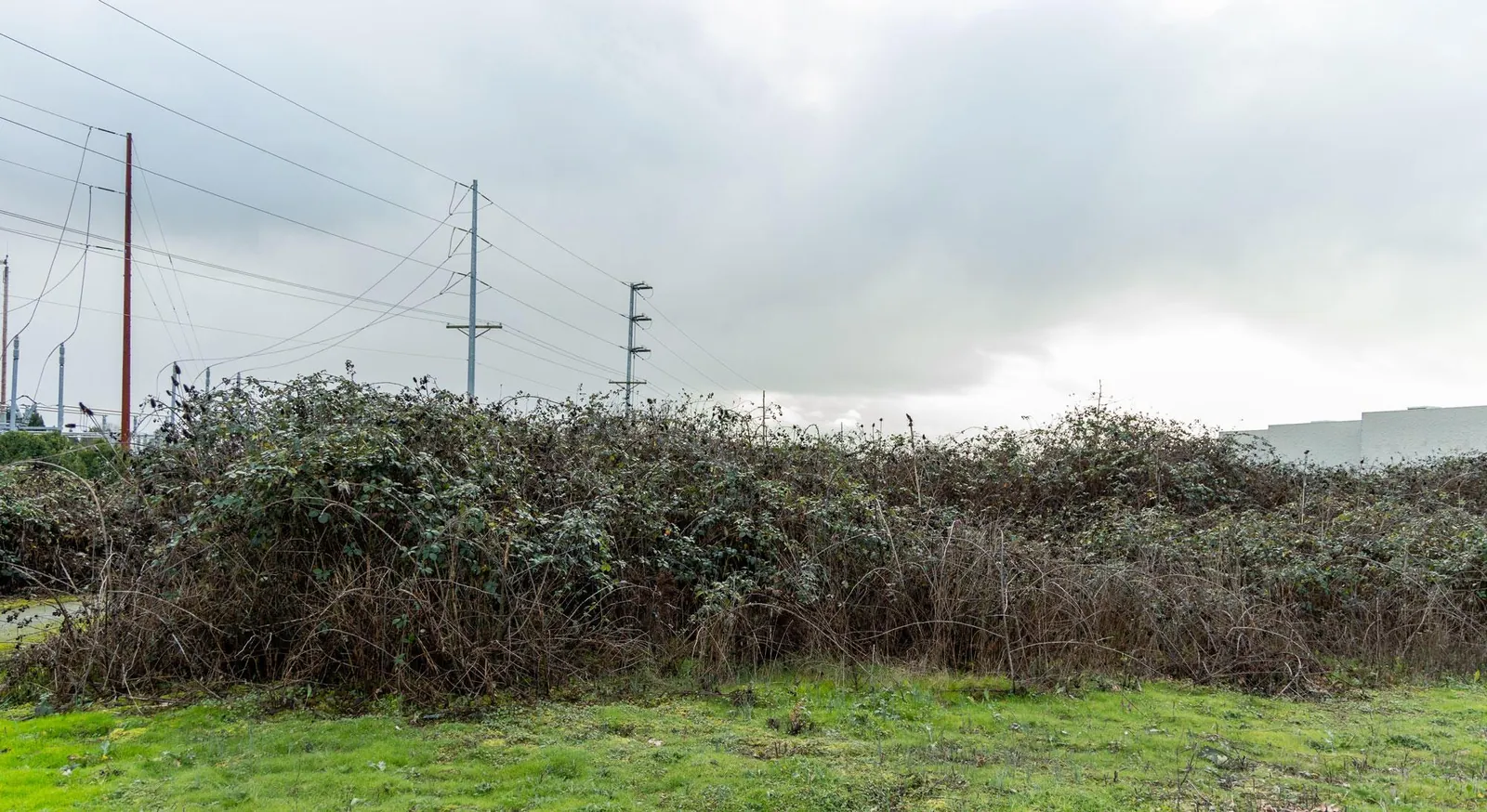
How Much Does Blackberry Removal Cost in Oregon?
A Portland contractor’s 2026 price guide puts a small blackberry patch at $250 to $600. A yard where the growth has spread runs $600 to $1,200. Heavy overgrowth on tough terrain can hit $1,200 to $3,000. Large acreage goes past $3,000, and sometimes past $5,000.
These are market numbers, not our price list. A Seattle landscaping company’s starting ranges run from $350 for a small cleanup to $6,000 and up. For a price on your own ground, we give free estimates on blackberry removal across the mid-Willamette Valley.
What does blackberry removal cost by job size?
The table sets the two published guides side by side. The Seattle figures are one company’s starting ranges from its own projects. It calls them examples of how quickly blackberry work can scale.
| Job size | Portland guide, 2026 | Seattle starting ranges |
|---|---|---|
| Small patch or a short fence line | $250 to $600 | $350 to $750 and up |
| Growth spread through a yard | $600 to $1,200 | $750 to $1,500 and up |
| Heavy overgrowth or a large overgrown area | $1,200 to $3,000 | $1,500 to $3,000 and up |
| Large acreage or a full restoration | Past $3,000, sometimes past $5,000 | $3,000 to $6,000 and up |
The Portland guide puts clearing labor at $130 to $250 per hour. The Seattle company sometimes starts from roughly $1 per square foot on larger areas that are easy to reach. It adds that a 1,000-square-foot patch does not automatically cost $1,000.
Very small jobs hit a floor. Landscaping companies usually have minimum project charges, the Seattle company explains. Portland and Seattle both sit outside our service area, so read these numbers as reference points.
What makes one blackberry job cost more than another?
The Portland guide names four drivers: coverage, density, access and how deep the roots have gone. It calls coverage the biggest factor. A 20-foot fence line costs less than half a yard. Half a yard costs less than a full acre.
Growth density matters just as much, the guide says. Fresh blackberry that sprouted this year is easy. Old Himalayan blackberry with deep crowns and layered canes is a different job. Thick growth slows a crew down and fills trucks faster.
Does your ground suit a machine or a hand crew?
Access changes the price fast, the Portland guide says. Flat open ground is cheaper than a slope. A narrow side yard with no gate costs more too. Hand-cutting and dragging everything through a 3-foot path pushes the cost up.
The job moves faster when a crew can bring in a brush cutter or small machine, the guide notes. Hand digging is where the hours pile up. An Oregon State University Extension guide cites 300 to 1,000 hours per acre for digging crowns by hand.
On fields and back acreage, we clear blackberry with machines. Our skid steer and excavator both run forestry mulcher heads. The excavator also lifts root crowns with a brush rake. A small patch behind a narrow gate may be hand work, and we say so on the estimate.
What about blackberry along a creek?
The Portland guide prices a creek edge above flat open ground. An OSU guide on streamside blackberry adds a second concern. Digging out roots disturbs the soil and can lead to erosion, especially on slopes or near streams.
We work upland ground. Scope near a creek or a wet corner gets planned with you before a machine goes in. Our guide to land clearing permits in Oregon covers the state rules for work near water.
What happens to the canes, and why does hauling add cost?
Cut blackberry makes a lot of waste. The Seattle company calls blackberry removal a material-handling problem. The Portland guide says quotes with loading, hauling, dump fees and cleanup run higher than cut-and-leave service.
We mulch in place and do not haul. The canes go through a forestry mulcher head and stay on the ground as chips. That is the same forestry mulching we run on overgrown acreage. Heavier pieces can be raked and piled where you want them.
OSU Extension notes that fine slash from mowing is often best left on site as a mulch. It holds soil moisture and helps keep weed seed from sprouting. Where blackberry is mixed with other brush, the job overlaps with our brush clearing work.
Is pulling the root crowns worth the extra cost?
The Seattle company separates two jobs. One is cutting blackberry down and hauling it away. The other adds digging out accessible crowns and roots. It calls those two very different projects.
Leave the crowns behind, the Portland guide warns, and you save money today but spend more later. Roots send new growth back up fast. Even after crown work, root material can remain and seeds can sprout.
On our jobs, the mulcher takes the top growth first. Where you want the crowns out, the excavator digs and rakes them up. OSU says machine removal works best when soils are moist, loose and free of rocks.
OSU Extension notes that clay settled across parts of this valley after the ice age floods. In heavy clay or compacted soil, the OSU blackberry guide warns, machine removal pulls fewer roots. On clay ground, we time the crown work to the soil.
Will you pay for follow-up visits?
Plan on it for an older patch. The Portland guide says severe cases need multiple visits to kill the roots and stop regrowth. The Seattle company puts it simply: removal gives you a reset, and maintenance protects the reset.
In a southwest Oregon field trial described by OSU, cutting the regrowth took 40 to 100 hours per acre. OSU adds that tractor mowing, where it is feasible, is much cheaper.
On open ground, we handle that follow-up with repeat brush hogging passes. Our guide on how to get rid of Himalayan blackberry lays out the timing.
Why does acreage price differently from a yard patch?
At some point, the Seattle company says, residential landscaping turns into land clearing. It notes that hand digging every crown across a huge property may stop making economic sense. On bigger parcels, the Portland guide adds, some companies price per acre.
Acreage is where machine hours replace crew hours. A mulcher head grinds a thicket down where it stands, and the excavator pulls crowns where the soil allows. For published per-acre ranges, see what land clearing costs in Oregon.
How do you get a price for your own property?
Every range on this page comes from published guides, and your ground sets the real number. We come out and look at the blackberry with you. The estimate is free.
Tell us how much ground it covers and what you want the land to do next. We clear blackberry across Linn, Benton, Marion, Polk and Lane counties from our base in Lebanon. Call or text (541) 936-4687, or read more about our blackberry removal service.