How Much Does Land Grading Cost?
Land grading costs $500 to $5,000 on average, according to HomeGuide, a national cost guide. It prices rough grading at $1 to $2 per square foot and finish grading at $0.40 to $1.00. Grading a full acre runs $17,400 to $43,600.
These are market numbers, not our price list. Where a job lands in those ranges depends on the ground and how much dirt has to move. For a price on your own land, we give free estimates on excavation and grading from our base in Lebanon.
What do national cost guides say land grading costs?
Each row names the national cost guide it comes from.
| What you pay for | Published range | Source |
|---|---|---|
| Land grading, average job | $500 to $5,000 | HomeGuide |
| Rough grading | $1 to $2 per square foot | HomeGuide |
| Finish grading, top 1 to 3 inches | $0.40 to $1.00 per square foot | HomeGuide |
| Land grading, per acre | $17,400 to $43,600 | HomeGuide |
| Leveling a 1/4-acre home lot | $4,400 to $10,900 | HomeGuide |
| Pad for a new home site | $1,500 to $10,000 | HomeGuide |
| Excavation | $2.50 to $15.00 per cubic yard | HomeGuide |
| Rock excavation | $50 to $200 per cubic yard on site, $220 to $250 hauled off | HomeGuide |
| Operator with machine | $100 to $300 per hour | HomeGuide |
| Operator only | $50 to $150 per hour | HomeGuide |
HomeGuide’s $500 to $5,000 average comes from its guide to leveling and regrading a yard. Acreage is a bigger job, and the per-acre row shows it. HomeGuide puts a full acre at $17,400 to $43,600.
HomeGuide also prices land leveling at $0.40 to $2.00 per square foot. That span runs from its finish rate up to its rough rate. Size is only the start, though. The ground itself and how far the dirt moves decide the rest.
What is the difference between rough grading and finish grading?
Rough grading moves the bulk of the dirt. HomeGuide prices it at $1 to $2 per square foot. That covers work like taking out a slope or shaping the ground so water drains off.
Finish grading is the last pass over the top 1 to 3 inches. HomeGuide prices it at $0.40 to $1.00 per square foot. Finish grading with topsoil and seed is landscaping, and a landscaper handles that part.
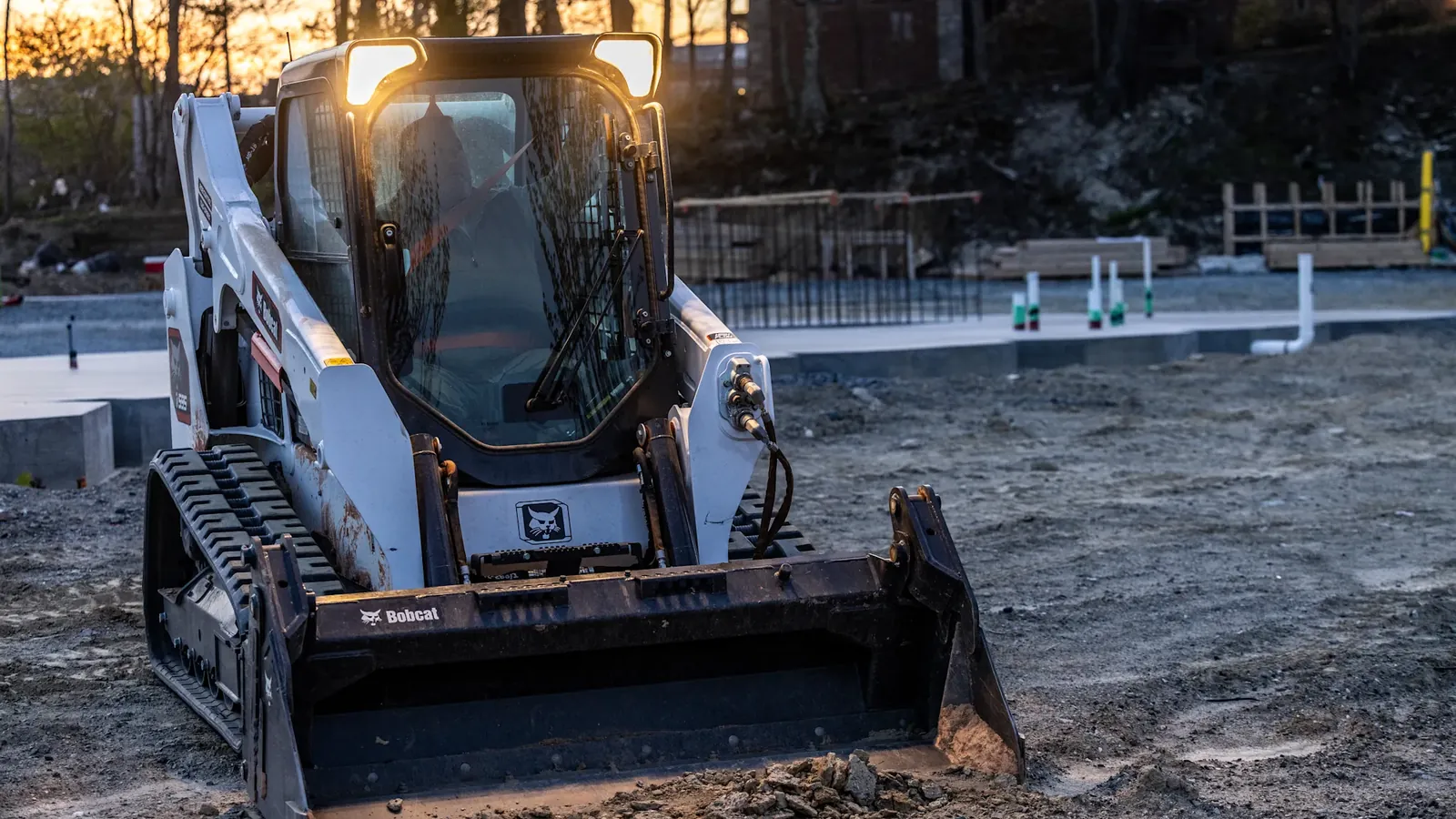
Our side is rough grading on cleared ground. We knock down berms and fill old stump holes and low spots with dirt from the site. Our excavator moves the heavy dirt, and our Bobcat skid steer spreads and smooths it.
What does it cost to level a home lot or grade a building pad?
HomeGuide puts leveling a 1/4-acre home lot at $4,400 to $10,900. Its excavation guide lists $1,500 to $10,000 for a pad on a new home site. The pad is the level ground the house sits on.
We rough grade the pad and shape the access up to it. Footings and final pad elevations belong to your builder’s excavation crew or engineer. They pick up from the rough pad. Basement digs and utility trenches are other trades’ work too.
On an overgrown lot, clearing comes before grading. Brush comes off first, and we dig the stumps out with the excavator. That first step is our lot clearing work. Our land clearing cost guide has the published ranges for it.
Is land grading priced by the cubic yard or by the hour?
You will see both. Grading contractors cut and fill, HomeGuide says, removing dirt from high areas to build up low areas. Cubic yards measure how much dirt moves, and HomeGuide prices excavation at $2.50 to $15.00 per cubic yard.
Rock costs far more. HomeGuide prices rock excavation at $50 to $200 per cubic yard when the rock stays on site. Hauled off, it runs $220 to $250. Our cut and fill moves dirt across your property, and hauling goes to other trades.
By the hour, HomeGuide lists $100 to $300 for an operator with a machine. The machine might be a mini excavator or a skid steer. Hiring an operator without a machine costs $50 to $150 per hour. Ask how a quote is priced and what it includes before you compare two.
A gravel drive is its own job with its own numbers. Our driveway grading cost guide covers them. If the lot comes with a worn drive, driveway grading can run in the same job.
What drives the price of land grading on valley ground?
HomeGuide names yard size, soil type, slope and fill dirt as the things that move the price. On valley ground, they show up like this:
- Valley clay. OSU Extension says clay soils harden when dry and turn sticky and heavy when wet. Grading goes best on firm ground.
- Winter rain. West of the Cascades, about half the year’s precipitation falls from December through February. We aim grading at the drier months.
- Slope. Steeper ground means more dirt to move to flatten it. Regrading a steep hillside goes to other contractors.
- Stumps and brush. Ground gets cleared before it gets graded. We dig stumps out during the clearing, and the grading fills the holes.
- Access. A narrow gate or a soft lane slows the machines getting in.
- Fill dirt. Dirt already on the lot costs nothing to buy. Fill you have delivered adds a material bill on top of the machine time.
Do you need a permit or a utility locate to grade land?
Digging starts with a utility locate. Oregon 811 typically asks you to call 811, then wait two business days before digging starts. We plan the schedule around that wait.
Grading permits depend on where the land sits and how much dirt moves. Corvallis, for example, typically requires a grading permit for excavation or fill over 50 cubic yards. A change of two feet or more to the existing grade can trigger one too.
Rules vary by city and county, so check with your county or city planning office before work starts. Our land clearing permit guide has more on Oregon rules.
How do you get a price on your own land?
Every range on this page is a market number from national cost guides. Your own ground sets the real price, so we look at it first. The estimate is free.
We do excavation and grading across Linn, Benton, Marion, Polk and Lane counties from our base in Lebanon. Call or text (541) 936-4687.